

iOS and Android app development
An app your customers open every day, written by the people who designed it.
- founded
- 2018
- projects delivered
- 200+
- clients in Sardinia and across Italy
- 65+
- nomination
- Awwwards
- projects for this service
- 6
We build iOS and Android apps, Progressive Web Apps and web management platforms for companies across Italy, from the idea to the app stores. Prices start from 1,800 €, and features are added when they're needed, one module at a time. The code is documented and stays yours.
An app is not a smaller website: it's a product. Users who come back daily, data to protect, payments to collect, notifications timed right.
We build native iOS and Android apps, progressive web apps and management platforms — from UX design to the App Store and Google Play, all in one pair of hands.
Since 2018, one fixed rule: every app starts from a real need, solved in the simplest possible way. If a feature isn't needed at launch, it doesn't make version one. That's how you contain costs, cut risk and launch while the idea is still current.
Who we do it for.
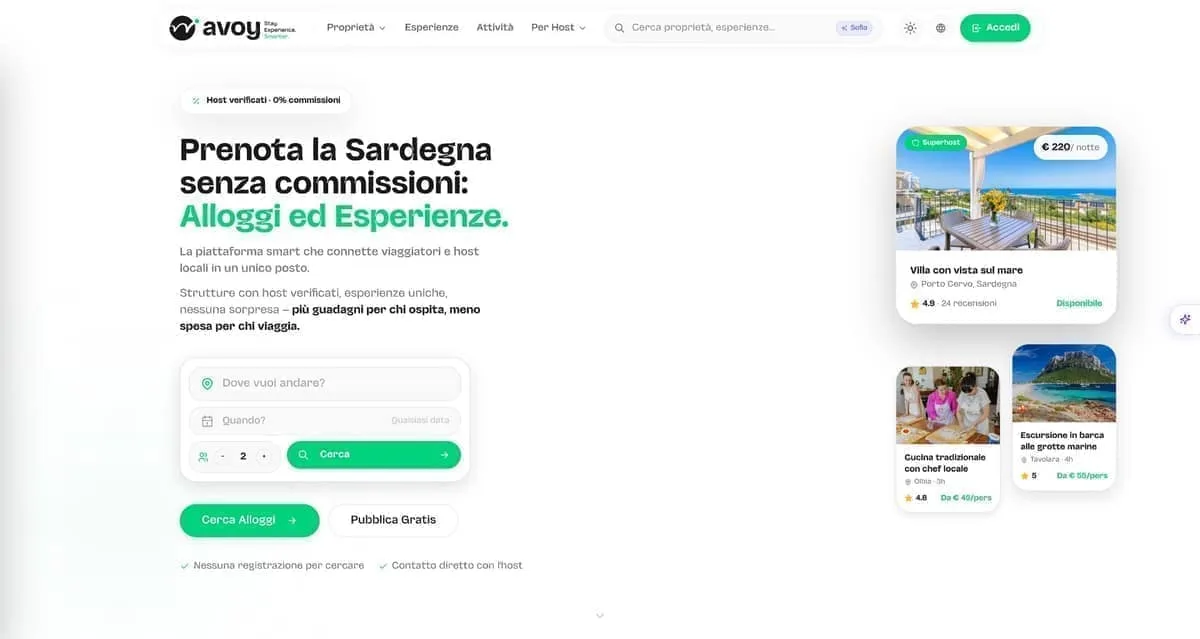
 Tourism & ExperiencesMapbox maps, calendars synced with Airbnb and Booking, an AI assistant live 24/7 in 12 languages, as for AVOY.
 RestaurantsQR menus, bookings, takeaway and WhatsApp automation on one platform, with modules switched on when they're needed.
 Wellness & BeautyBooking from a phone with live slots, packages, gift cards and automatic WhatsApp reminders.
 SaaS & Digital ProductsStripe subscriptions, modules activated one at a time, a backend that grows from a hundred users to ten thousand.
We also do it for







What's included.
TRY IT
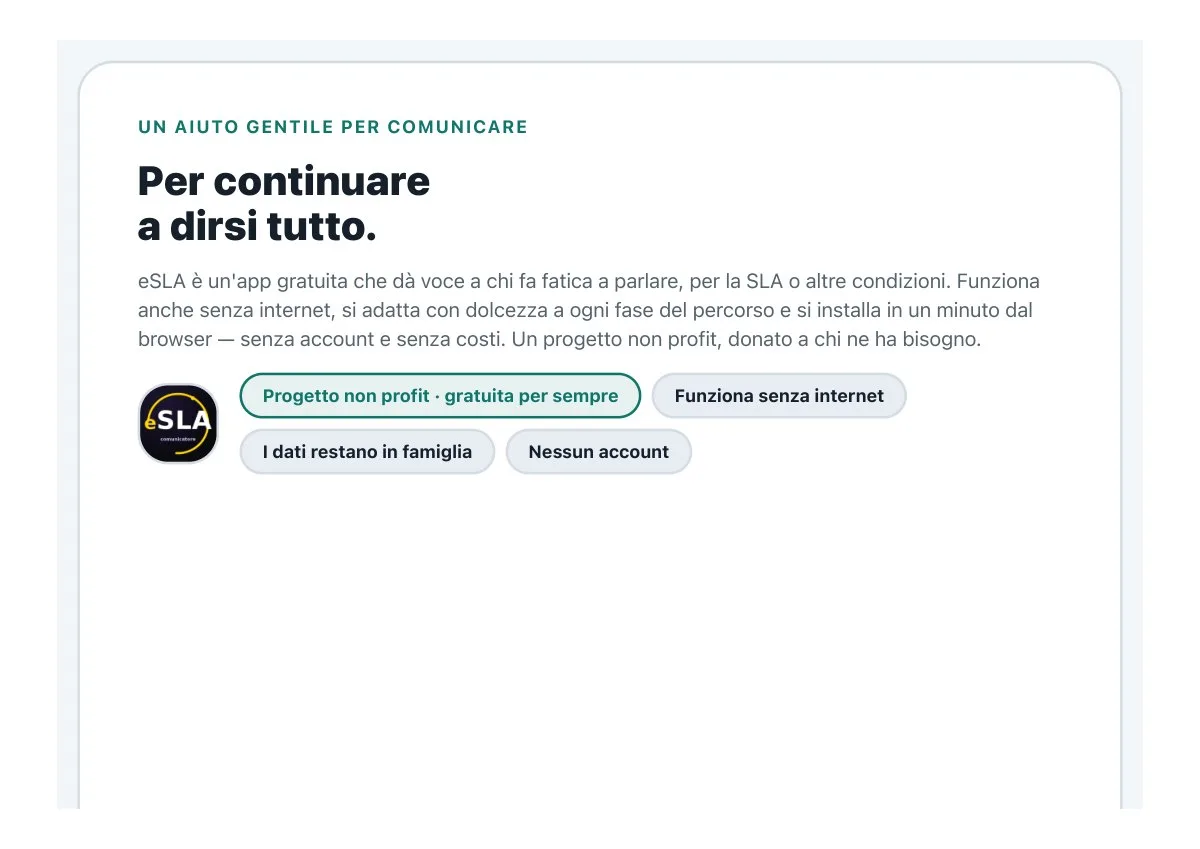
The same shell on iOS and Android, from the same project.
02
Native iOS and Android apps
For performance, push notifications, camera, GPS or in-app payments, the answer is a native app on the stores. We develop cross-platform: one codebase for both, lower cost than two separate builds, an experience indistinguishable from pure native in nearly every case.
03
Progressive Web Apps
A PWA opens in the browser, installs to the home screen, works offline and skips the stores. For a digital menu, client portal or internal tool it's the rational choice: lower cost, instant updates, no store approval to wait for.
04
Web apps and management platforms
Bookings, stock, clients, shifts: when spreadsheets stop coping, we build the web app that holds your processes together — dashboards, roles, automations, reports. The right platform is the one your team uses without a manual.
05
Backend, APIs and databases
Data, rules, security. Clean APIs and architectures that handle growth: a hundred users to ten thousand without starting over. The data stays yours, on infrastructure you control.
06
Integrations
Stripe payments and subscriptions, WhatsApp Business messaging, OTA calendar sync via channel manager, maps, invoicing, existing CRMs. A good integration removes a manual task, it doesn't add another panel.
07
Store publishing
Developer accounts, graphic assets, ASO-optimised listings, Apple and Google review cycles through to approval. Details we've walked many times — we take them off your plate.
08
Ongoing maintenance
A published, abandoned app stops working: operating systems change, libraries age. Our plans cover updates, backups, monitoring and small monthly changes — the base for bigger releases as the product grows.
Discovery and scope
The problem, not the feature list: who will use the app, when, to do what. We define version one — what's in, what waits — and put features, timelines and costs in writing before any commitment.
UX and clickable prototype
A prototype that feels like the finished app, put in real users' hands. Fixing a flow on a prototype costs hours; on a published app, weeks.
Development in short releases
Every two or three weeks you get a working version on your own phone, not a progress slide. Corrections happen while they're still cheap.
Testing, stores, launch
Real-device tests, edge cases, backend load, a beta with real users. Then both stores, with optimised listings. On launch day we're online with you.
After launch
The first months bring real usage data — and the real priorities. We monitor crashes, performance and behaviour, and turn them into a roadmap.
What we build it with.
Standard, documented technology — never exotic frameworks nobody will maintain in two years. Mobile is cross-platform with React Native; web apps and PWAs use React and TypeScript. Backends run on REST APIs, relational databases and managed cloud, with automatic backups and error monitoring from day one. Our integration experience is verifiable in the projects: recurring Stripe payments, WhatsApp Business automation, Mapbox maps, Airbnb and Booking calendar sync, multilingual AI assistants built into the product. The code is versioned, documented and yours — another team could pick it up tomorrow.
- React Native
- React
- TypeScript
- Node.js
- PostgreSQL
- Stripe
- Mapbox
- WhatsApp Business
- App Store
- Google Play
- Figma
Use first, features later
The mistakes in the briefs that reach us are almost always the same three, and none of them is about code.
Wanting everything in version one
Every extra feature stretches timelines, raises costs and delays the moment the app meets real users. Launch lean, grow on data.
Choosing the technology before the problem
"I want a native app" is often the answer to a question nobody asked. Sometimes the right call is a PWA at a third of the cost; sometimes a web platform with no stores. The use case decides.
Forgetting the backend
The interface is visible, the backend isn't — so plenty of quotes skip it, until the data doesn't hold up mid-project. We design it first: it has to last longest.
Real projects.
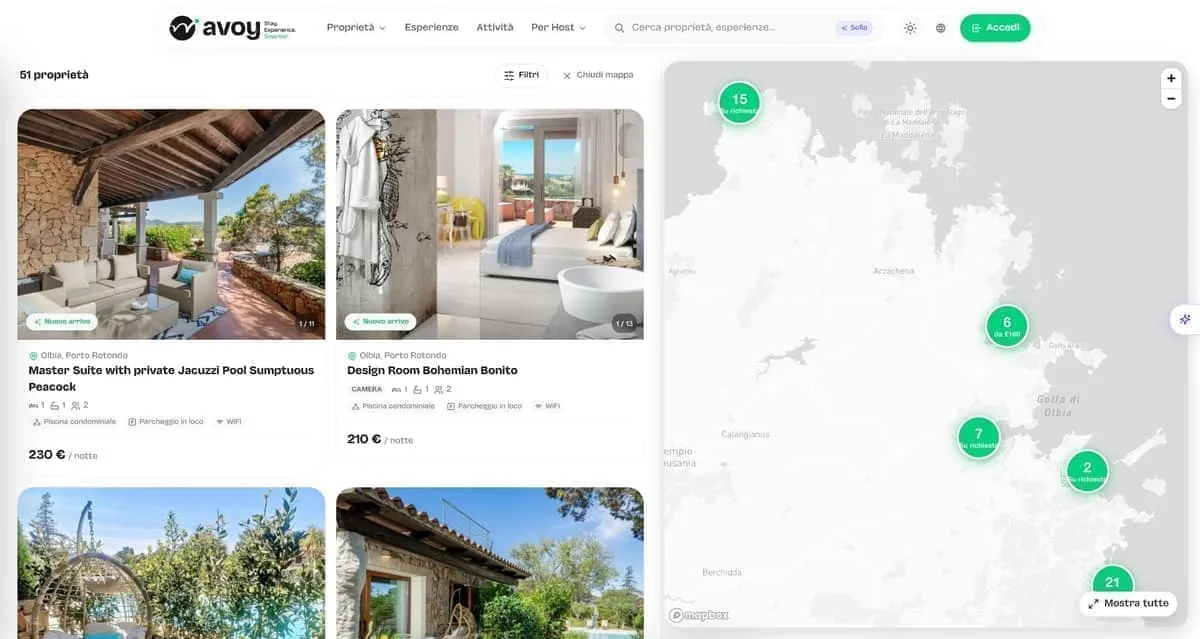
AVOY
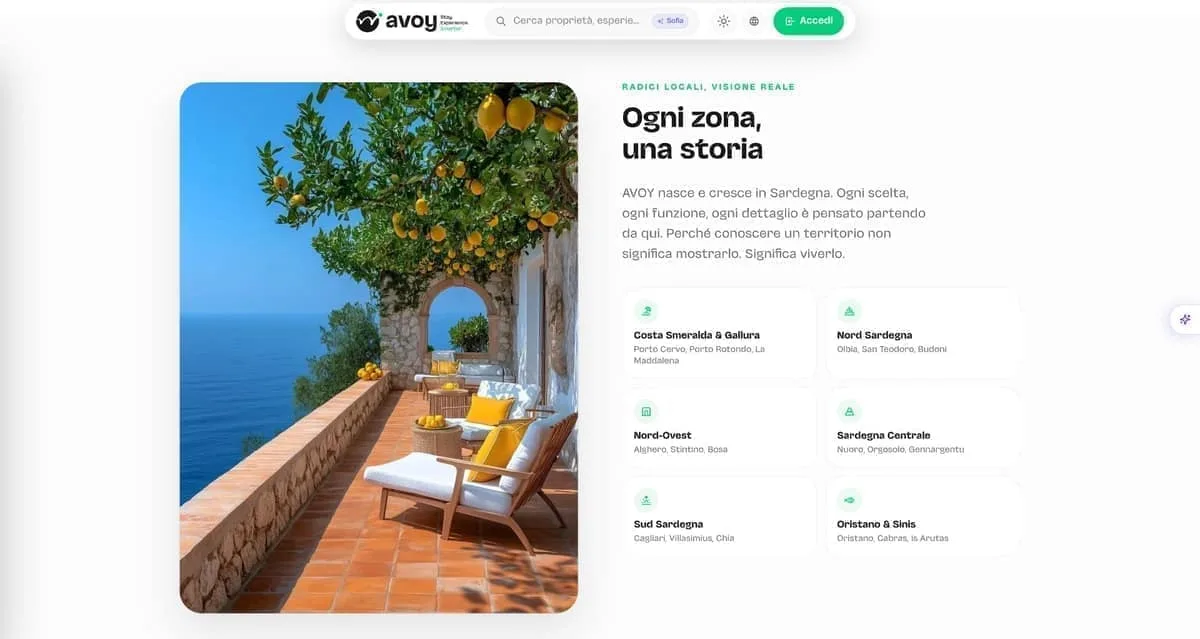
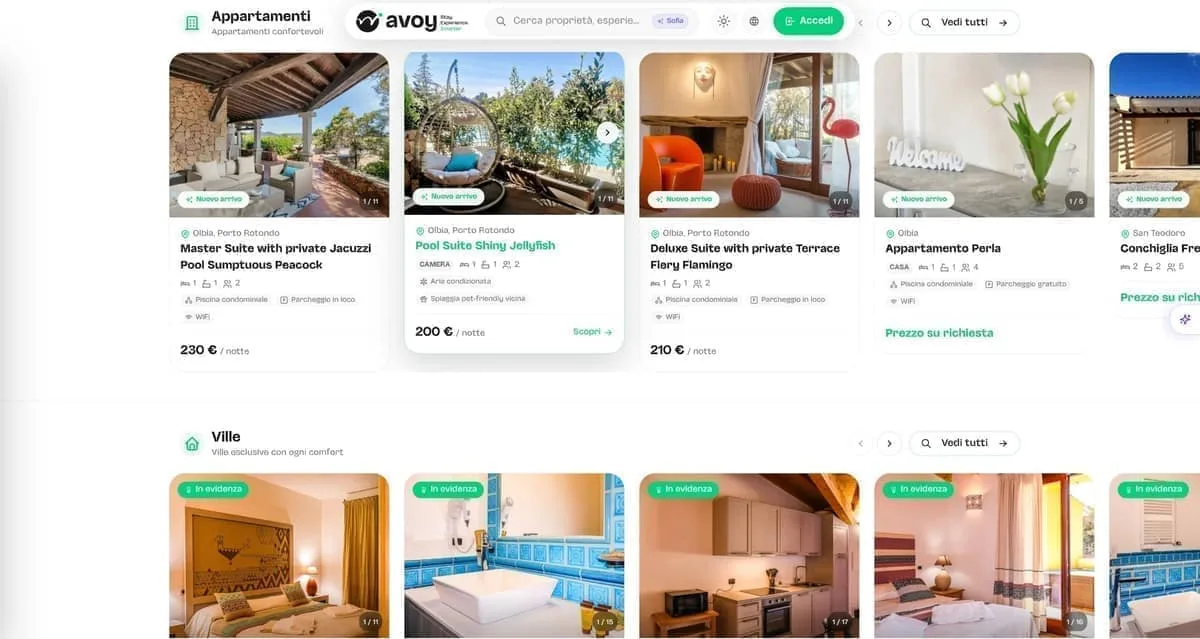
A zero-commission tourism marketplace: three verticals, a Mapbox map with clustering, a channel manager synced with Airbnb and Booking, and an AI concierge live 24/7 in 12 languages.
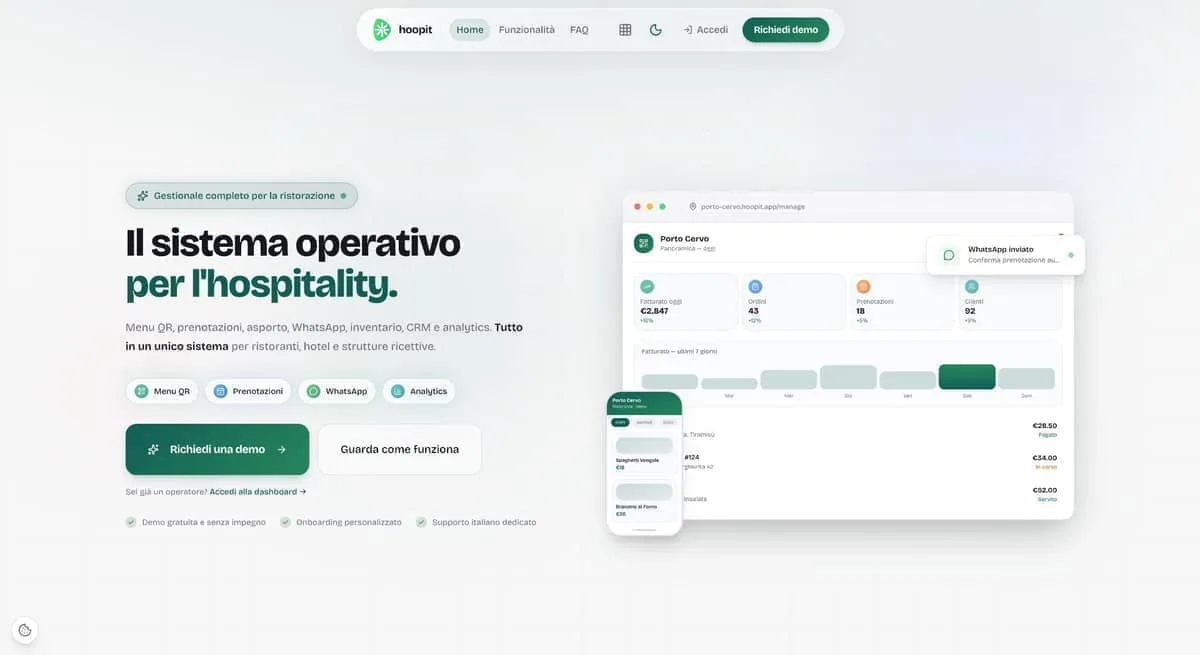
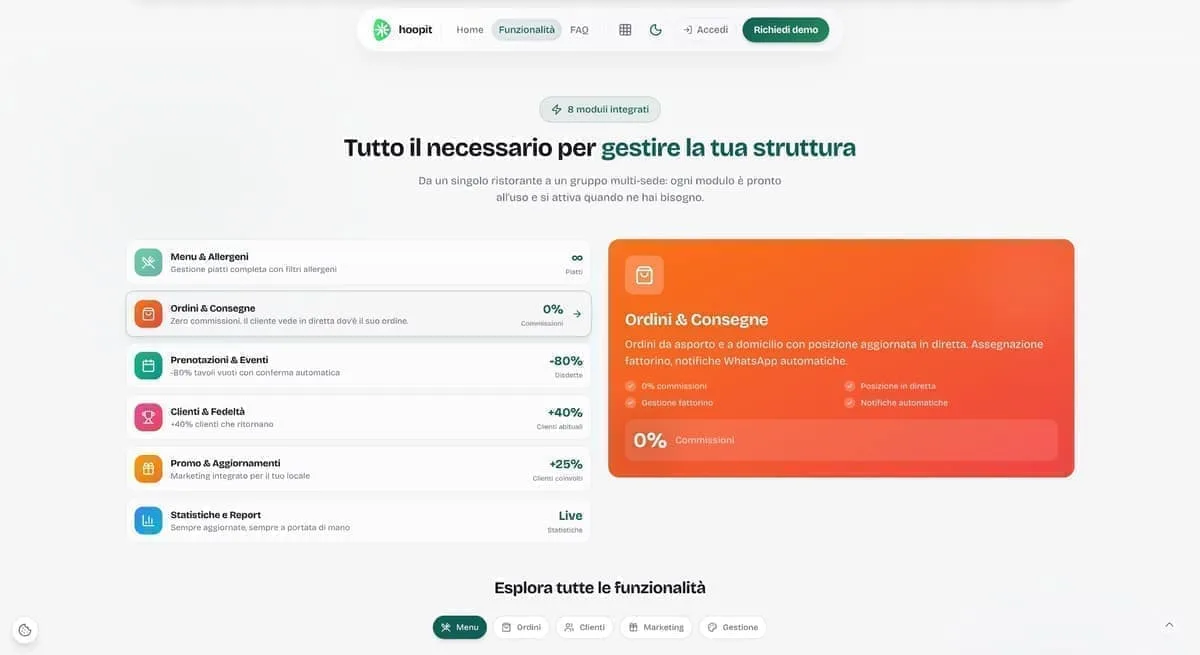
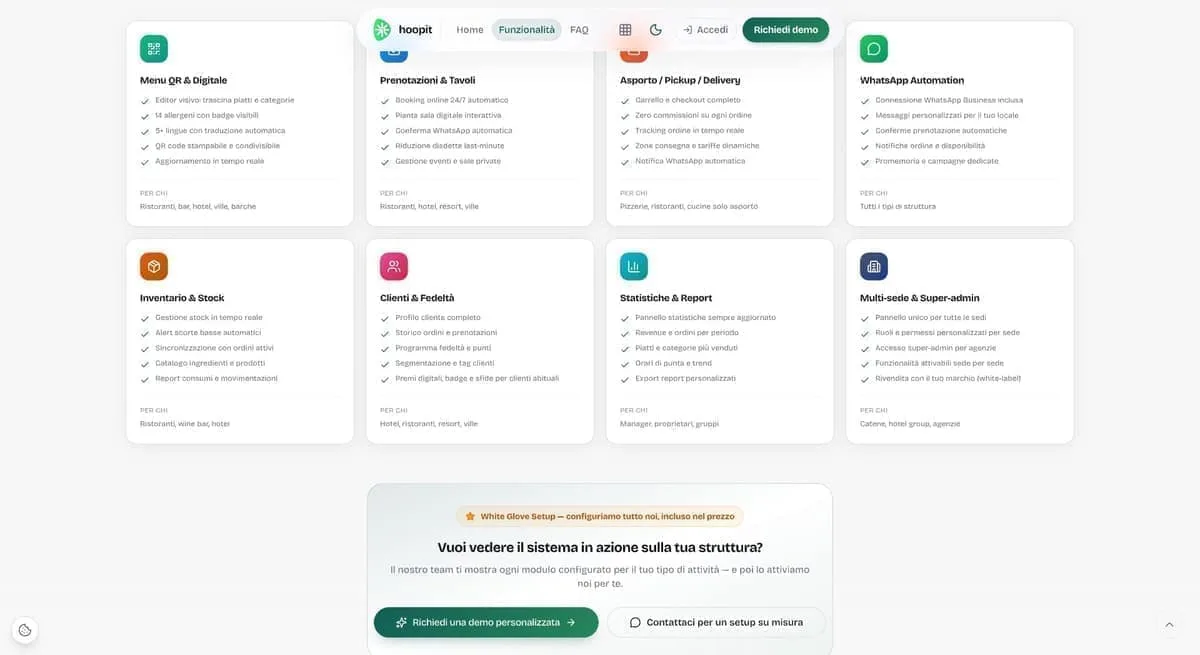
hoopit
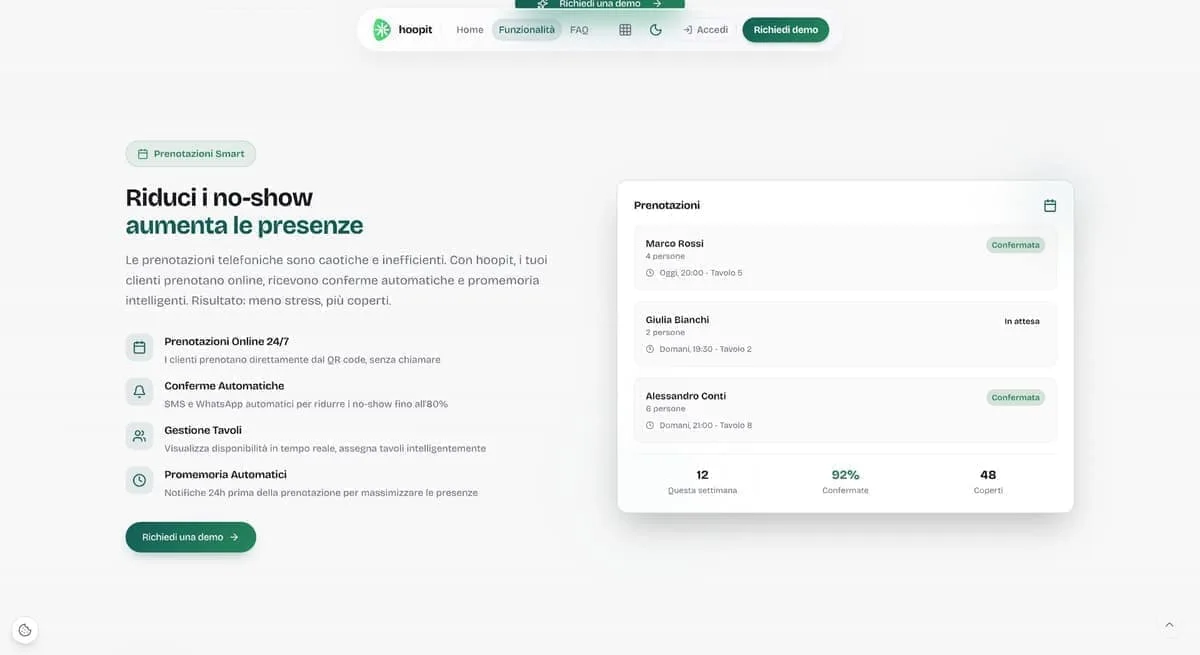
A hospitality SaaS with eight modules activated on demand — QR menus, bookings, takeaway, WhatsApp automation, CRM, inventory — and a white-label console for chains and agencies.
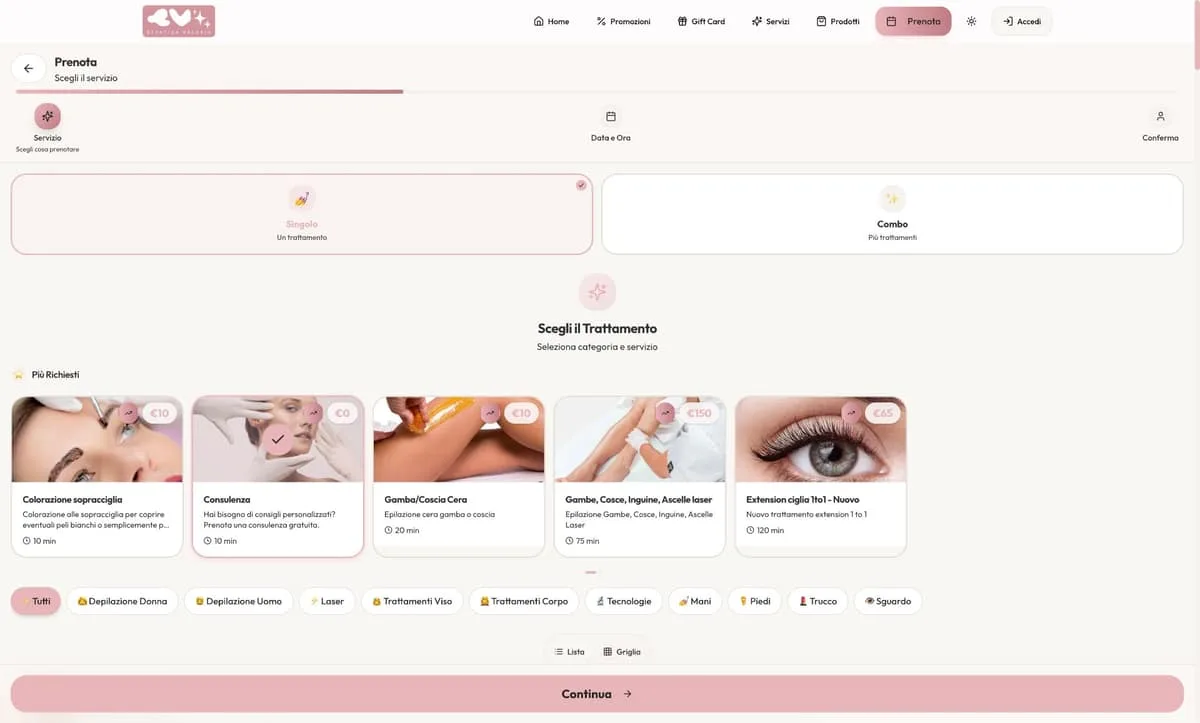
Estetica Valeria
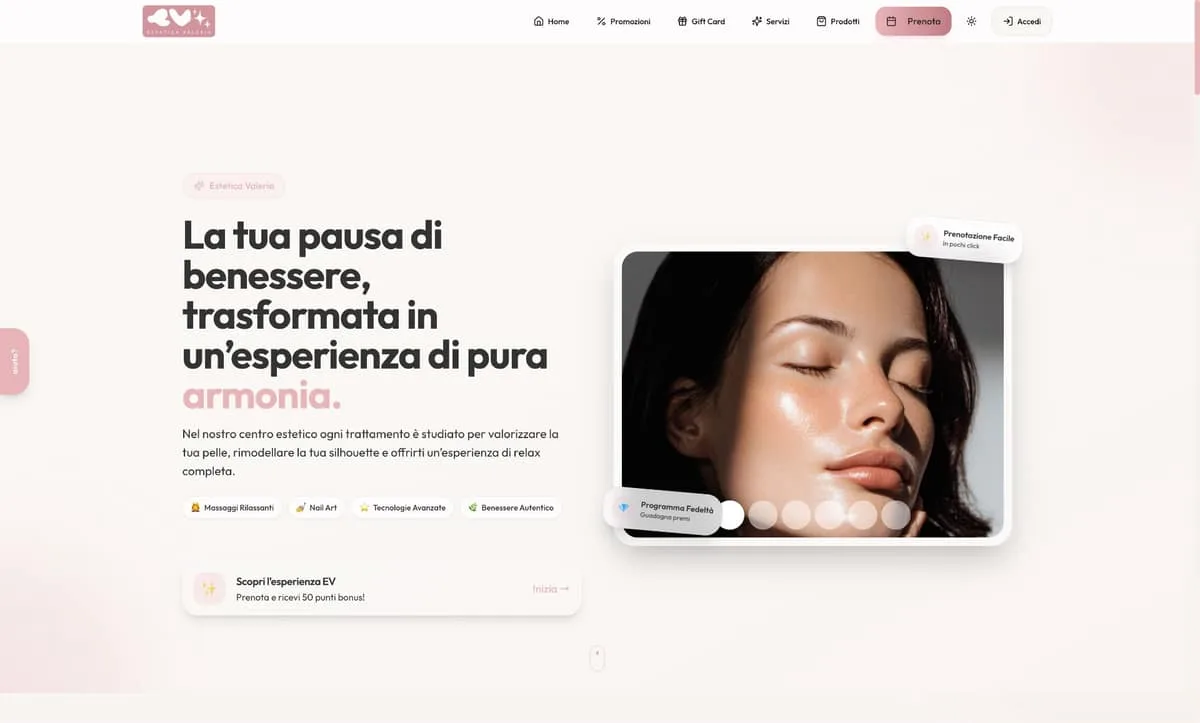
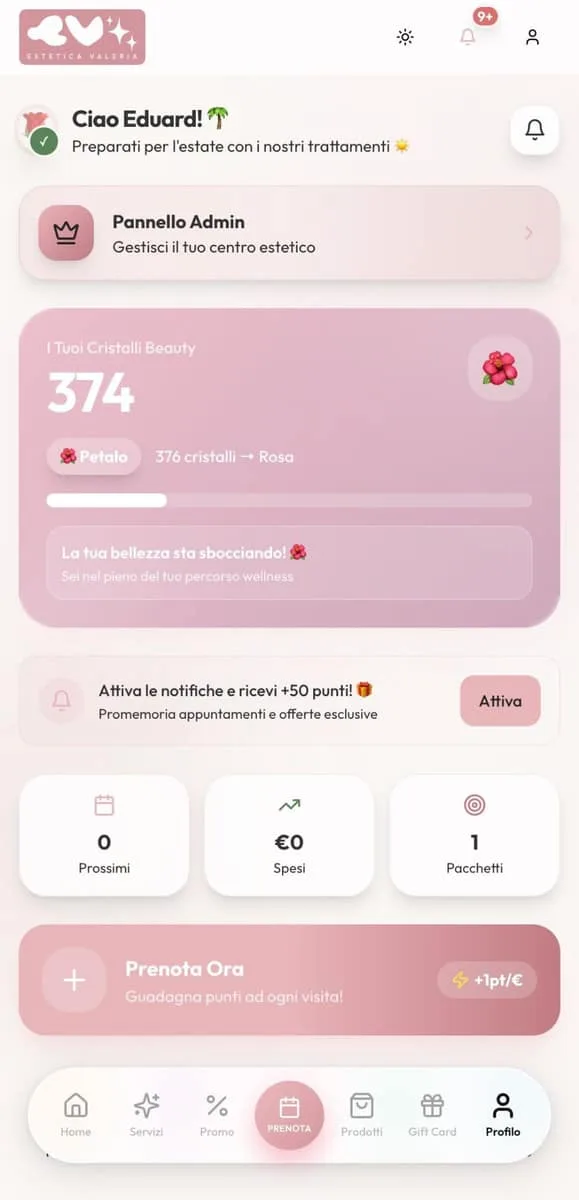
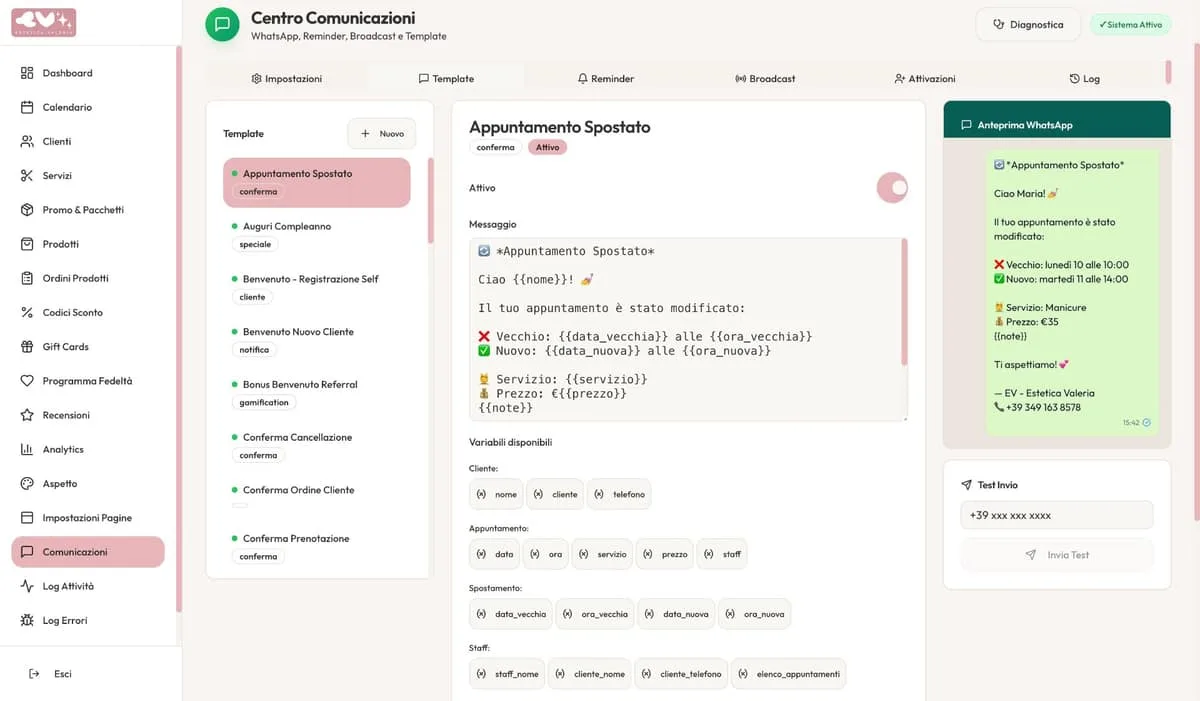
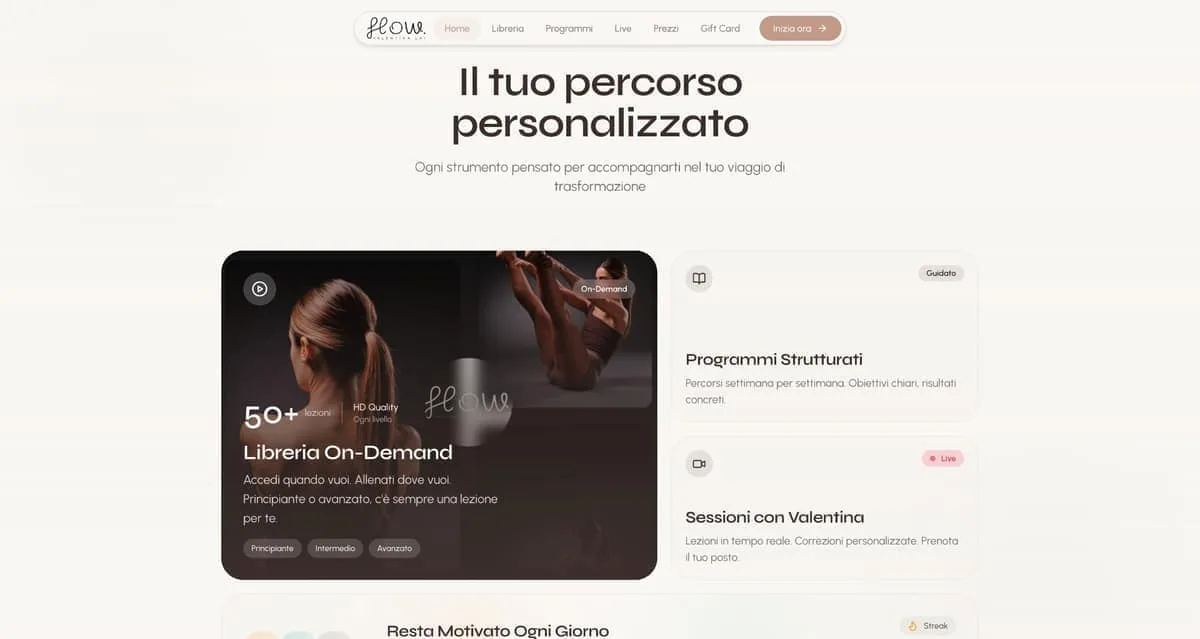
A complete salon suite: multi-step booking with live slots, multi-staff calendar, CRM with packages and gift cards, a points loyalty programme and automatic WhatsApp reminders.
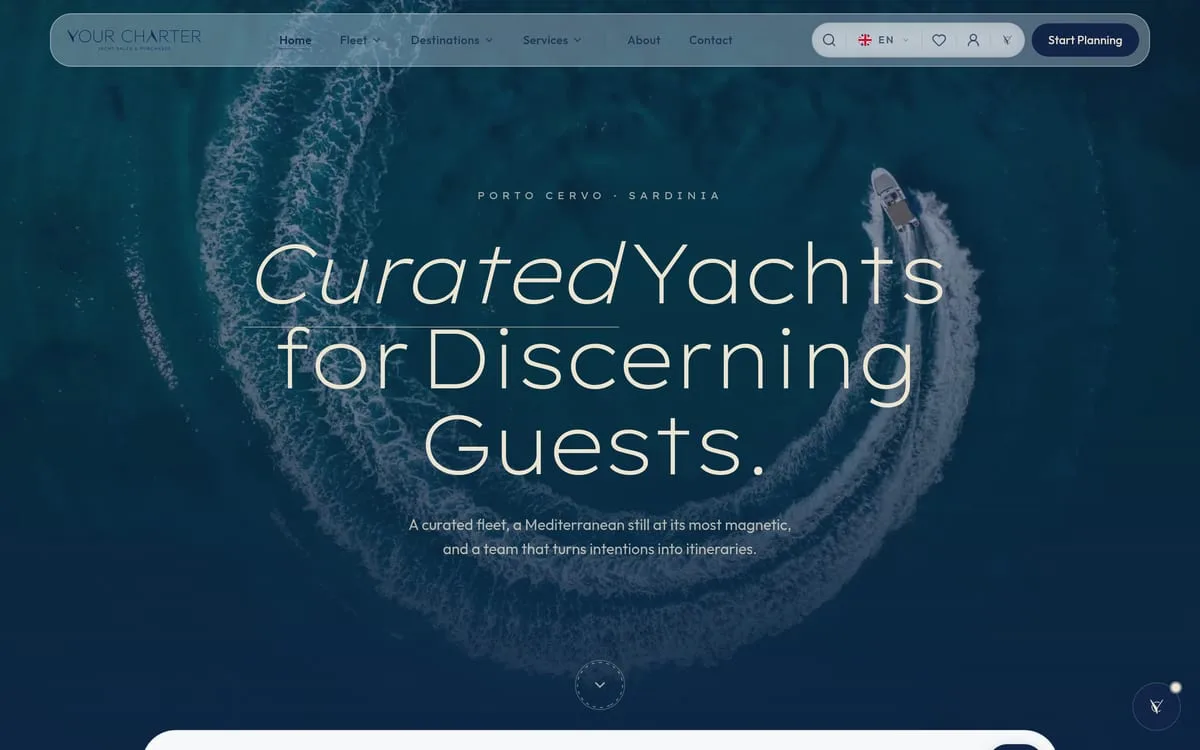
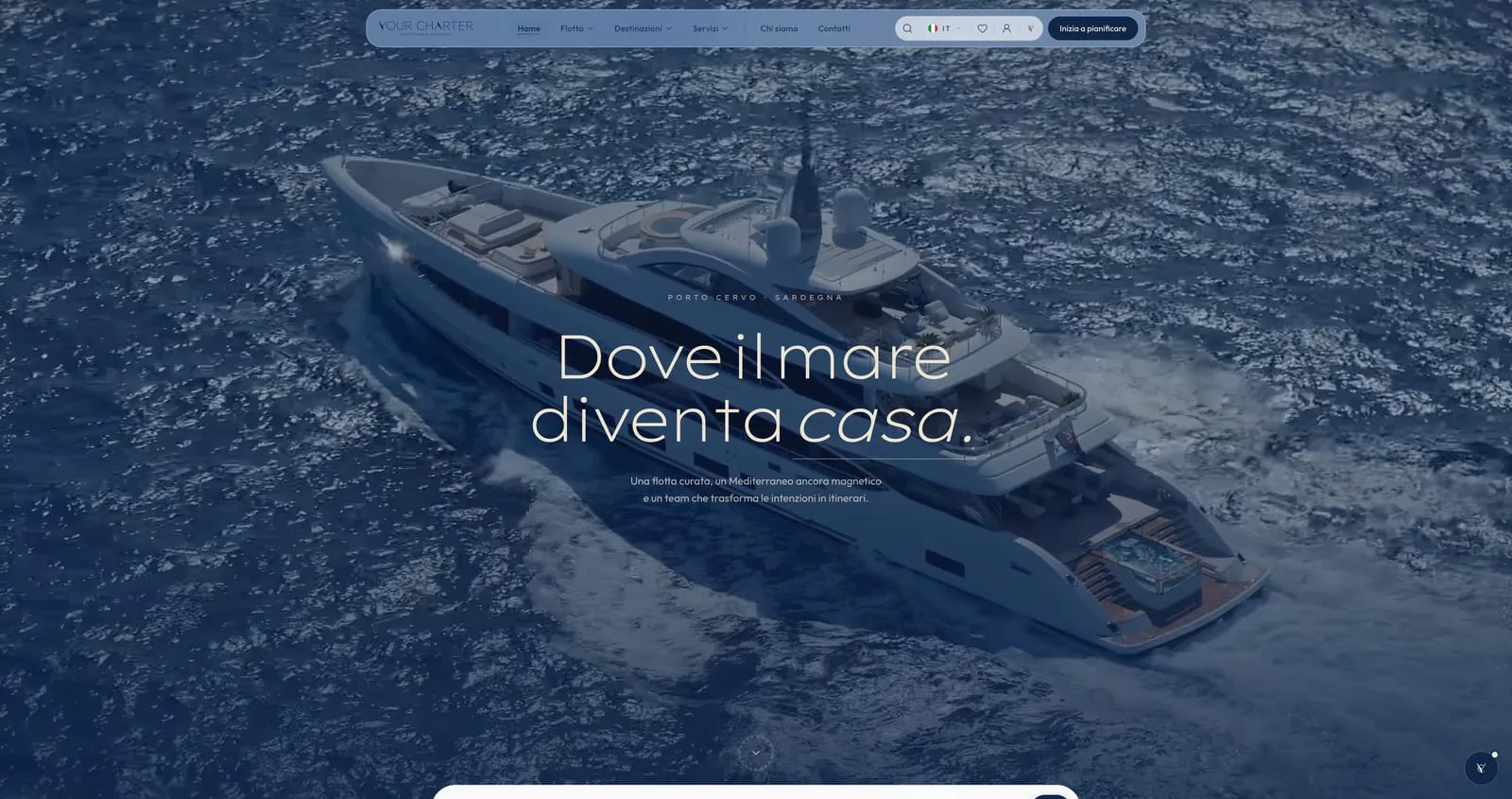
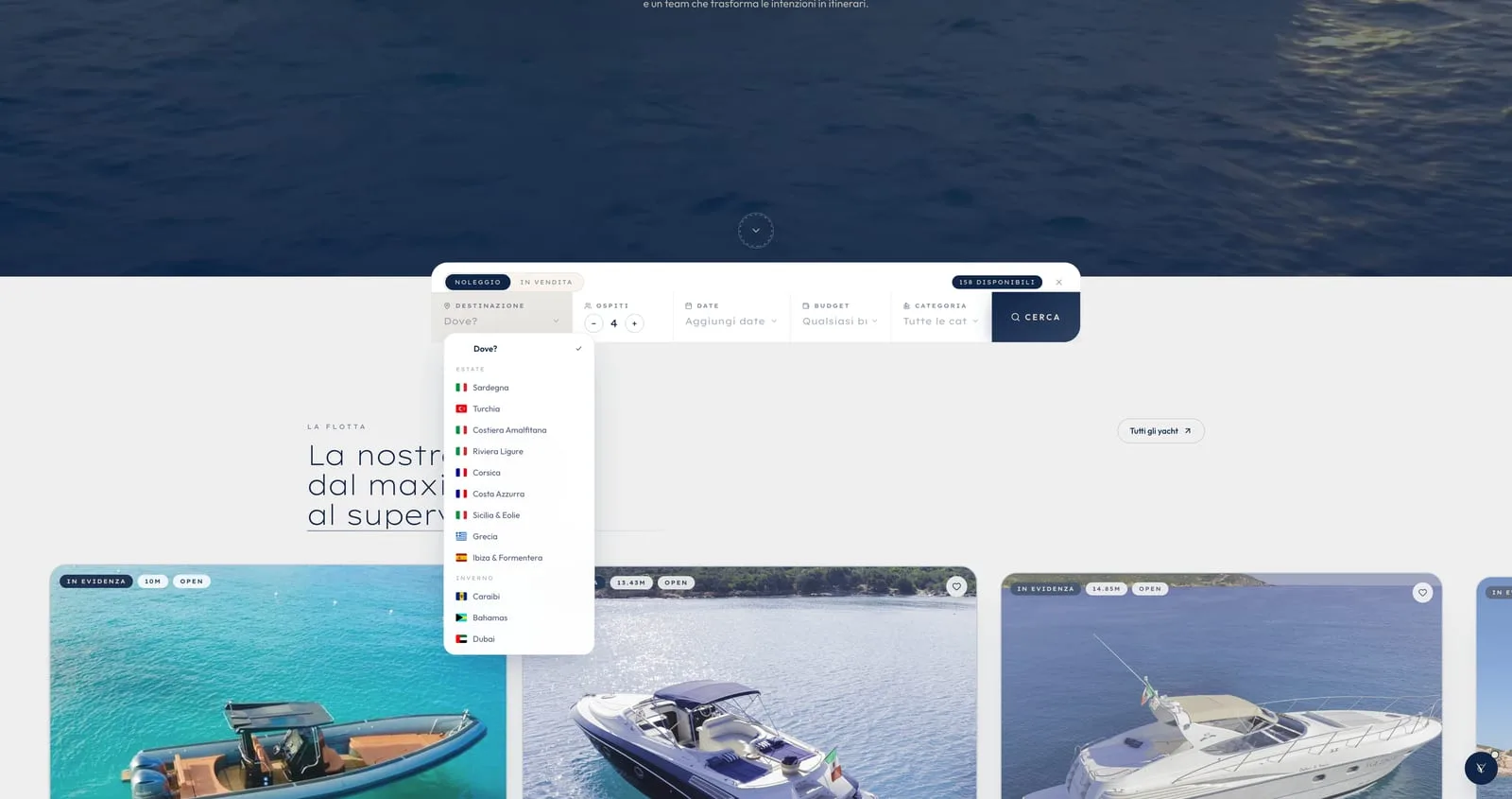
What clients say.

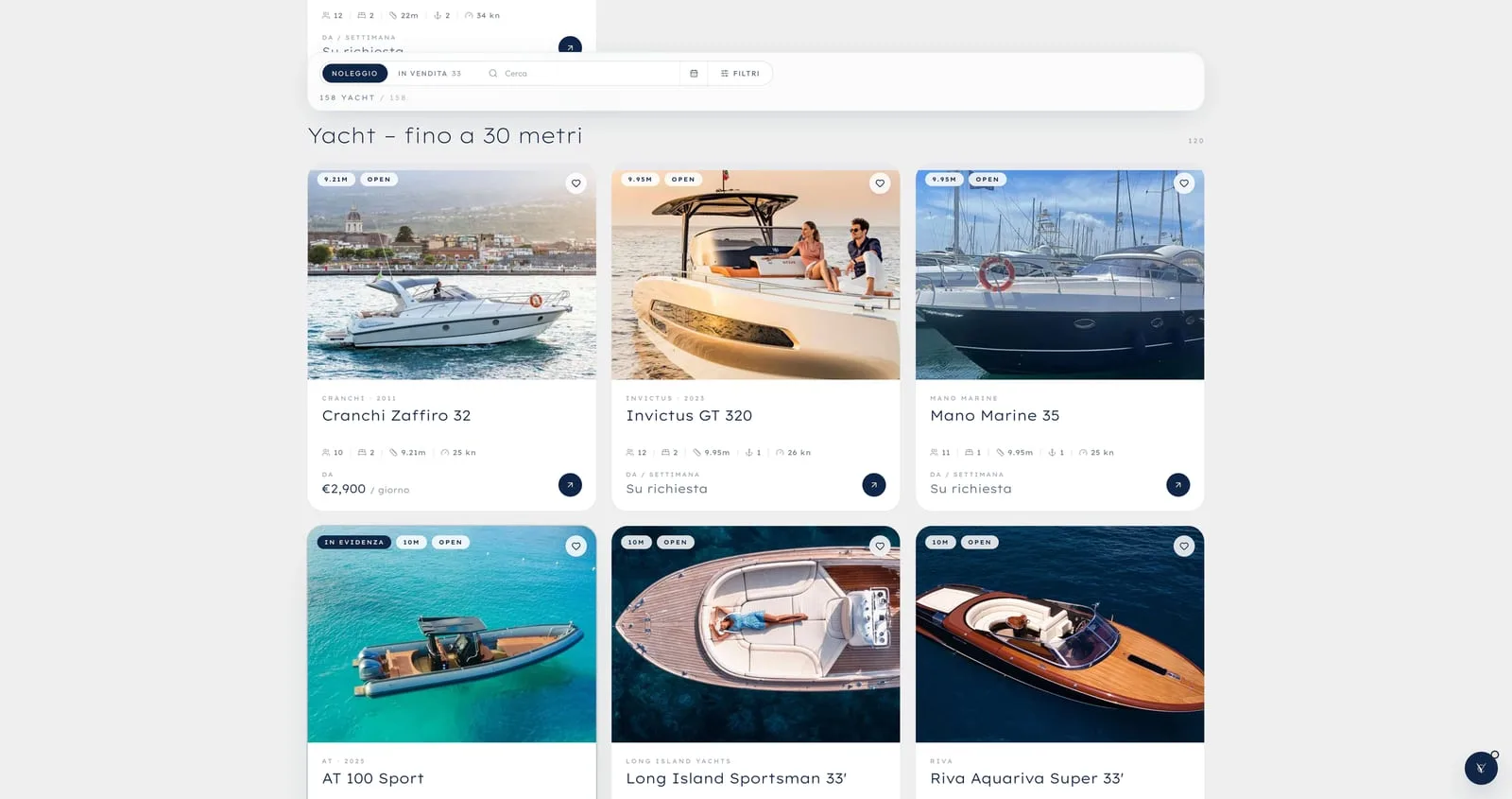
In the world of bilingual yacht charter, the first impression on the web is worth everything. Now our platform is fast, elegant, and provides all the technical details it takes to bring clients on board without a worry.
Your Charter


We wanted our beauty suite to convey elegance and relaxation from the very first moment. With this new identity and the integrated booking system, clients walk in already in the right frame of mind for wellness.
Estetica Valeria

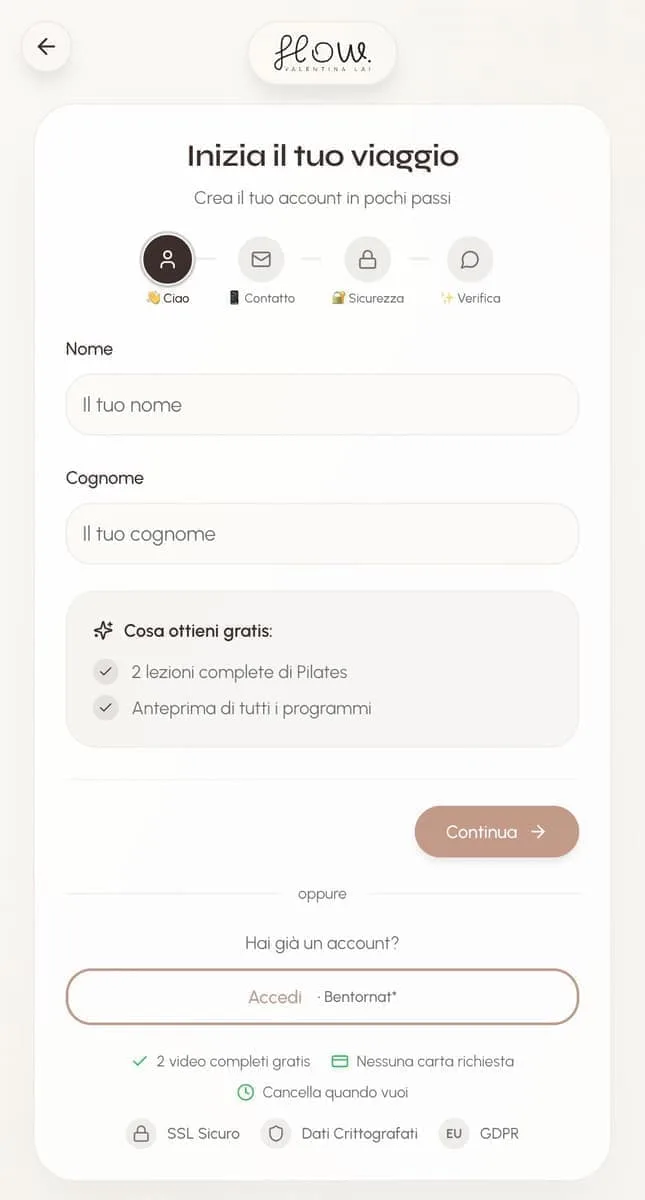
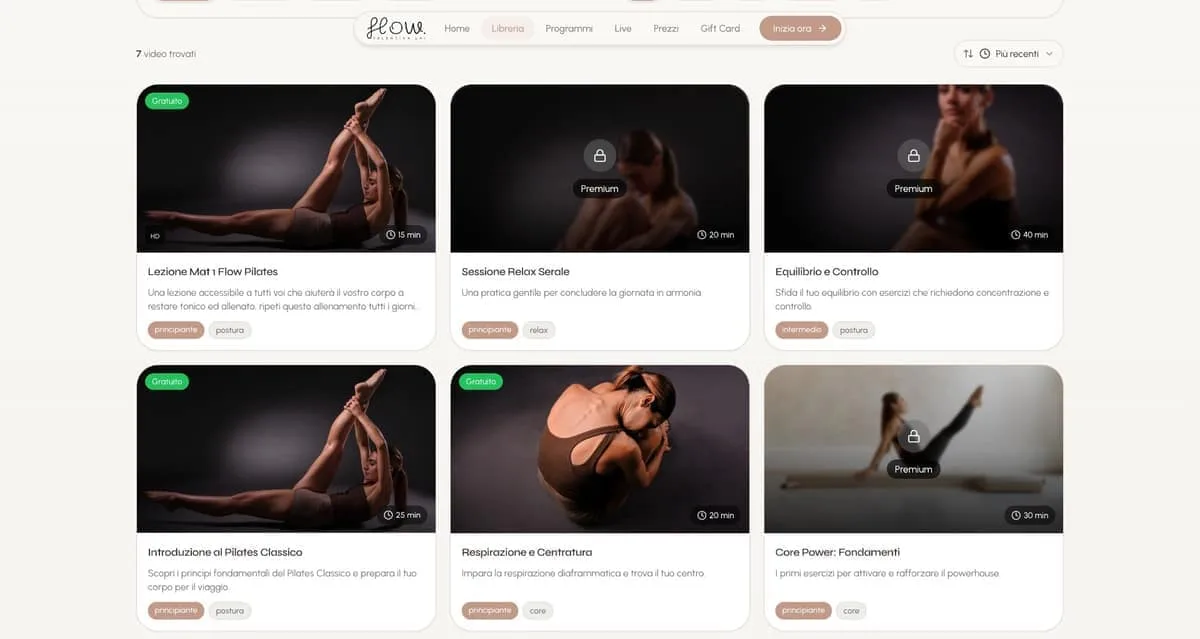
Before launching the app for our Pilates classes, between Porto Cervo and the digital side we lost hours coordinating chats and phone calls. Now our clients manage live and on-demand classes on their own, and we finally get to enjoy the work.
Flow Porto Cervo
In Sassari we wanted to position ourselves as the Longevity Wellness centre of reference, stepping out of the usual patterns. The new brand and the web platform literally jump off the screen, communicating pure innovation.
LOWE
In our restaurant in Olbia the care for the kitchen goes hand in hand with the guest's experience. Between the digital menu and smart reservations, whoever comes to see us enjoys dinner without a hitch, starting from the choice of table.
La Sartoria del Gusto

Our floral installations live on detail and immediate visual impact. Having such a well-kept digital gallery lets us show clients our value straight away — and they often give us carte blanche.
Ketty Flowers Designer
At our polyclinic in Palau we care for patients of every nationality, so a multilingual welcome in no fewer than eight languages is vital. Having a perfectly structured website has removed any misunderstanding and sped up access to appointments.
Medica Palau

Telling Sardinia without falling into the usual tourist clichés was our real challenge. This brand and the visual identity we built with the team have tremendous strength and breathe the authentic soul of the island.
Sarda Trips
Managing eight lodgings between San Teodoro and Porto San Paolo without handing a small fortune to the big booking platforms seemed a pipe dream. Since we have had our own direct channel, margins can breathe again and guests reach us without intermediaries.
Ambra Holiday Rooms

We needed a Sardinian listing platform that highlighted both stays and local experiences, giving owners visibility without punishing fees. With Avoy we have the right tool: fast, organised by category, and without crazy commissions strangling the business.
AVOY
Management software for restaurants and hospitality has to be concrete help between the tables, not an IT nuisance. This software turned our internal organisation around, cutting errors to zero and letting us work with a clear head.
hoopit

Sanluri is not just a building site. It is the first demonstration that in Sardinia you can build differently — faster, more sustainably, more safely.
Green Tech Costruzioni
With three wine shops on the Costa Smeralda we needed an online meeting point that did justice to our labels. Now whoever is looking for the right wine finds the way home straight away.
In Vino Veritas
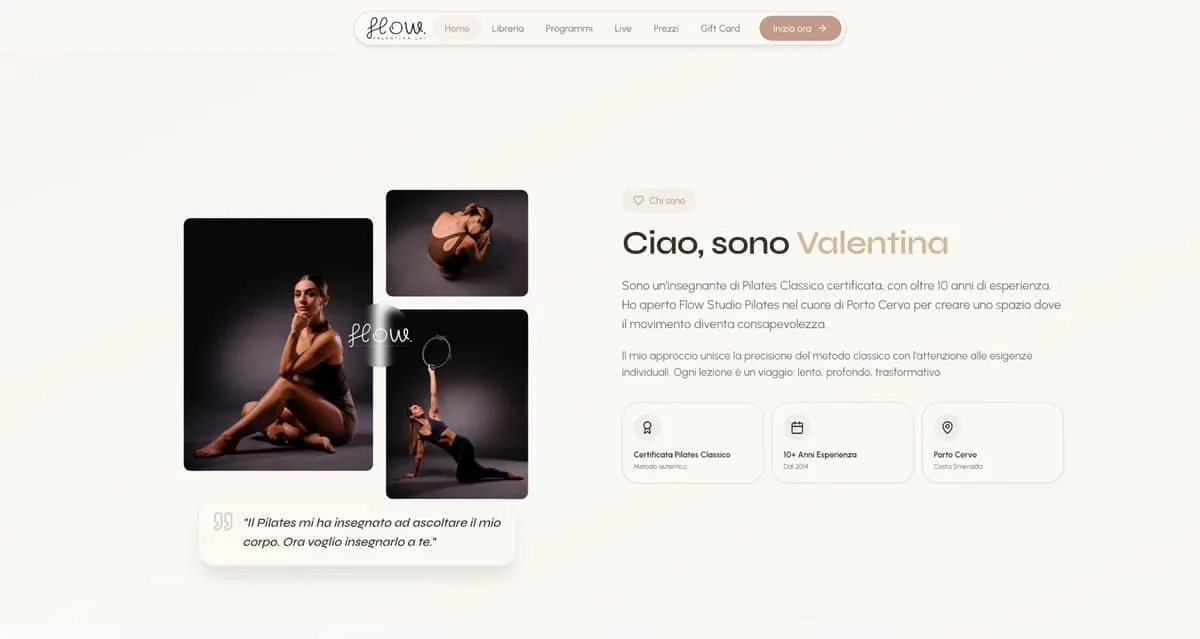
Our physical studio in Porto Cervo needed a website as polished as our rooms. Now managing schedules and classes is smooth, and whoever steps in online finds themselves immersed in our very atmosphere.
Flow Studio Pilates

Launching a sustainable streetwear e-commerce with print-on-demand was a complex bet. Now the shop runs perfectly, the graphics stand out at their best, and we can focus on creativity alone without the stress of warehouse stock.
Fionard

In our line of work roadside assistance allows no waiting, and the workshop has to be a byword for total reliability. Having such a direct digital point of reference lets customers find exactly the seriousness we put on the road every day.
CDA Servizi Auto
As a creative studio we were tired of having a sloppy image. We finally have a website and a portfolio worthy of our capabilities, which speak plainly to anyone who means business.
Wonder Creators
Companies we've worked with.






















- Your Charter
- Estetica Valeria
- Fondazione di Sardegna
- Avoy
- Fionard
- Cantine Antigori
- Tenuta Stalder Guiso
- Nanumoru
- Hopfenberg
- Versilia Weimar
- Sa Republica Sarda
- Sud Delivery
- Impresa Restaura
- Green Tech
- Studio Legale Senis
- Avvocato Zuddas
- Manufatti Vinci
- Viapixel
- Tecnicoffee
- Saditappo
- Academia de su Sardu
- Agenzia Labix
- Been Energia
- Il Redentore
- Studio Foto Immagine
- CDA
- Osua
- Punta Falcone Resort
- 5 Star Mooring
- IVV
Frequently asked.
An app starts from 1,800 €. From there it grows module by module, on the features that really matter: a PWA arrives sooner and costs less than a full native app. The quote is written and free, with scope and timeline: after a call, or by describing the project in the configurator at /en/quote/.
It depends on the use case. PWAs are faster and cheaper to build; native apps deliver better performance and full hardware access. We help you choose without over-engineering.
Yes, the whole process: asset preparation, store listings optimised for search (ASO), and publishing on the App Store and Google Play.
Apps need continuous updates for compatibility, bug fixes and new features — we offer ongoing support plans for exactly that.
App development
An app your customers open every day, written by the people who designed it.
The price goes up with features, integrations and backend, and if the project also needs a website or an e-commerce store. That's why we write the quote after discovery, not before.
WHAT'S INCLUDED
- Native iOS and Android apps
- Progressive Web Apps (PWA)
- Web apps and management platforms
- UX/UI design tested with real users
- Scalable backends and APIs
- App Store and Google Play publishing